Replace the wait,
not the solver.
Nautilus is a neural CFD surrogate: it learns from the runs your lab already produced and predicts new variants without going back to the solver queue. In a box next to your test bench, without your data leaving your network.
Test section · water · U∞ →
Your browser does not offer WebGL2, so the channel cannot solve the flow here. Nothing else on this page depends on it.
This is a Navier-Stokes solver running on your GPU right now. It is not Nautilus: it is the physics Nautilus learns to predict, with your geometry and your runs.
- Nautilus latency
- NOT MEASURED · Phase 3
- Error against CFD
- NOT MEASURED · Phase 2
- Channel solver
- — fps · grid —
- EnSight Goldingest
- CGNSingest
- STAR-CCM+exports EnSight
- Ansys Fluentexports CGNS
- OpenFOAMreference CFD
- NVIDIA PhysicsNeMotraining
- MeshGraphNetmesh-based model
- FNObaseline
- DGX Sparkon-prem
- RTXworkstation
- AWS · Azureyour cloud
Every variant waits its turn in the solver queue.
One CFD run per variant costs minutes to hours of licence and queue time. That is why teams explore five variants when they would like to explore five hundred.
Nautilus learns from the runs you already have and answers in the browser while you move a parameter. The solver is kept for validating the few variants that matter.
CFD solver, per variantminutes to hours
+ 494 variants waiting
Nautilus, per variantNOT MEASURED
From the runs you already paid for to a model that answers while you think.
What you already have: CFD runs (EnSight Gold or CGNS, from STAR-CCM+, Fluent or OpenFOAM); A box in the lab (An NVIDIA DGX Spark or an RTX, or your cloud); A browser (Nothing to install on the engineer’s desk).
EnSight · CGNS You export
The runs your lab already produced leave the solver as EnSight Gold or CGNS. No licence touched, nothing re-simulated.
.mdlus checkpoint We train
A PhysicsNeMo surrogate learns your parametric geometry inside your network. We publish its error on cases it never saw.
u · p field You explore
Move a parameter in the browser and the flow field answers. The few variants that matter go back to the solver for validation.
Your data never leaves your network.
Nautilus runs where your simulation already lives. Training consumes exports from your solver: nobody needs access to your environment or your licence. On the Spark or the RTX, if the internet drops, it keeps working.
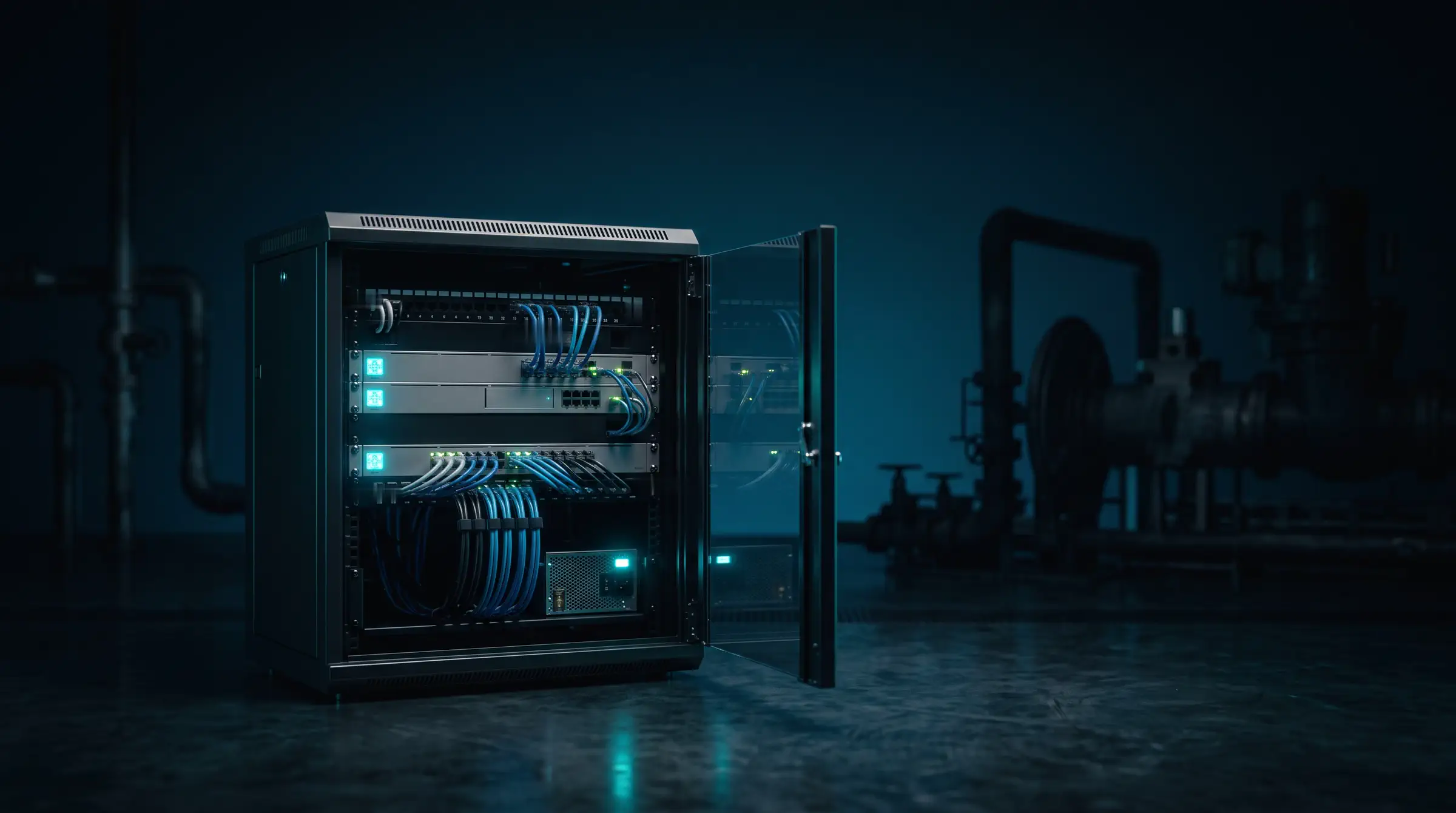
- A DGX Spark in the lab
- Docker, the NVIDIA Container Toolkit and an NGC login. One command brings up the rest.
- An RTX workstation
- The same image on x86, on the GPU you already own.
- Your AWS or Azure
- Multi-arch OCI image, aarch64 and x86. No SaaS dependency.
- Path to production
- The same PhysicsNeMo, on NVIDIA AI Enterprise.
Your network
What we have not measured yet.
We publish the list before we have the results, because whoever shows you their gaps will also show you their error. Every cell gets a measured number or stays empty.
| Measure | Target | Method | Value |
|---|---|---|---|
| Inference latency per variantPhase 3 | < 100 ms | DGX Spark GB10 | not measured |
| Solver time per reference casePhase 1 | — | OpenFOAM v2512, 300 cases | not measured |
| Relative L2 error per fieldPhase 2 | published as measured | Unseen cases | not measured |
| Flow-rate error against CFDPhase 2 | published as measured | 10% held-out dataset | not measured |
| Pressure-drop error against CFDPhase 2 | published as measured | 10% held-out dataset | not measured |
What we promise, and what we do not.
We do promise
- Field and engineering-scalar prediction in milliseconds, with the numbers measured and published.
- Training on your existing runs, ingested as EnSight or CGNS. Without touching your licence or entering your environment.
- Transparent error metrics against the reference CFD, on cases the model never saw.
- Interactive exploration in the browser. Nothing to install on the engineer’s desk.
- On-prem or in your cloud, the same multi-arch OCI image.
We do not promise
- To replace your solver or certify results. Final validation stays with the solver and the lab.
- To extrapolate outside the trained parameter range. Outside it, it tells you.
- Chemistry or full multiphase in the proof of concept: scalars are transported passively.
- Omniverse on ARM64. Omniverse rendering is optional and x86-only.
- Success stories. We are new and would rather say so.